AI in education is moving from hype to intent
For the last two years, the education conversation around AI has often sounded like a race: who is using it, how fast and in how many places. That phase is ending.
What is emerging now is a more mature question and it is a much better one for schools: what is AI for, exactly, and does it improve learning, teaching and wellbeing in practice?
This shift matters a lot for ClassMap.io.
The strongest signal comes from the OECD’s Digital Education Outlook 2026, which reframes the conversation around effective use, not blanket adoption. The report emphasizes that generative AI can support learning when it is guided by clear teaching principles, but warns that better task performance does not automatically mean better learning. It also points toward purpose-built tools, co-designed with educators and aligned with pedagogy, safety and transparency. (OECD)
That is exactly the direction schools need and exactly where ClassMap.io fits.
The hype phase created noise. Schools now need clarity
AI hype made one thing obvious: schools are under pressure to respond. Teachers are experimenting, students are already using tools outside institutional control and school leaders are trying to create policies while the technology keeps changing. The OECD notes this reality directly, highlighting that GenAI is widely accessible and often used beyond formal school control because it is easy to use and versatile. (OECD)
But “AI everywhere” is not a strategy.
In schools, every new tool competes with something scarce: teacher attention. If a tool adds friction, creates uncertainty, or increases documentation work, it may look innovative while making the day harder. In that context, the real trend is not AI expansion. It is AI filtration. Schools are becoming more selective.
They are asking:
- Does this reduce workload or increase it?
- Does it support teacher judgement or replace it?
- Does it produce trustworthy signals?
- Does it align with how learning actually happens?
- Can we explain it to staff, parents and leadership?
This is the right shift. It is also a strong opening for ClassMap.io because ClassMap.io is not trying to automate the classroom. It is trying to create real-time classroom clarity with less effort.
The OECD’s key message is simple: AI must be pedagogically guided
One of the most important ideas in the OECD 2026 outlook is that GenAI can be useful when it is grounded in teaching and learning principles, but can become counterproductive when it simply outsources effort. The OECD also highlights that purpose-built educational tools often show more promise than general-purpose AI tools because they are designed with explicit learning goals in mind. (OECD)
This distinction is critical.
In education, a polished output can hide weak understanding. A student can produce something that looks impressive without deep learning. A teacher can generate materials faster but still not gain better visibility into what is happening in the room. A school can buy an “AI solution” and still not improve wellbeing, inclusion, or support decisions.
That is why “use it with intent” is such a powerful framing.
AI should not be used because it is available. It should be used because it strengthens a specific educational process:
- noticing disengagement earlier
- reducing teacher cognitive load
- supporting reflection after lessons
- improving pastoral visibility
- creating better school-level insight without surveillance
This is where ClassMap.io can lead with confidence.
What purposeful AI looks like in a ClassMap.io context
For ClassMap.io, purposeful AI is not about generating generic content. It is about helping schools make better decisions from real classroom signals, while protecting trust.
That means AI should sit on top of meaningful data capture and teacher workflows, not beside them.
A strong ClassMap-aligned model looks like this:
1) AI supports teacher judgement, not substitutes it
ClassMap.io captures classroom micro-signals in real time. The AI layer should help teachers interpret patterns, spot trends and prioritize attention. It should not pretend to know the classroom better than the teacher.
That is a very different proposition from generic AI chat tools. It is also more credible in schools.
2) AI reduces mental load
The OECD’s framing is useful here because it pushes us away from “AI as output machine” and toward “AI as learning and teaching support.” For ClassMap.io, the practical equivalent is:
- short summaries after lessons
- signal-based prompts for reflection
- lightweight weekly wellbeing or engagement patterns
- simple language reports for leadership
When teachers feel that AI gives them back time and clarity, adoption becomes much easier.
3) AI is designed around educational purpose
If ClassMap’s AI is built around engagement, wellbeing, inclusion and classroom flow, then the product is not “another AI tool.” It becomes a school-aligned support system.
That is the difference between hype and product-market fit in education.
Why this trend favors trust-first platforms
Another reason this shift matters is that schools are becoming more cautious about privacy, safety and explainability. The OECD blog and report both stress the need for systems that are intentionally designed for education and scrutinized for educational value, not just technical novelty. They also emphasize co-creation with teachers and students and the importance of governance and responsible design. (OECD)
This is a major advantage for ClassMap.io.
ClassMap's positioning is already aligned with what schools are asking for:
- no cameras
- no microphones
- no facial recognition
- privacy-first design
- teacher-led capture
- school-friendly visibility
In other words, ClassMap.io is already built for the trust layer that AI in education now requires.
As the market matures, this matters more, not less. The next wave of education AI winners will not be the loudest tools. They will be the tools schools can defend internally and sustain operationally.
The real opportunity is not “AI adoption.” It is better school decisions
Most AI conversations in education still focus too much on content generation. That is only one slice of the problem.
School leaders need something else: decision-quality visibility.
They need to know:
- which classes may need support
- where engagement patterns are changing
- whether teacher load is increasing
- where students may be going quiet before it becomes an incident
- what to prioritize without waiting for end-of-term data
This is why ClassMap's role is so important. ClassMap.io can become the layer that turns classroom signals into school intelligence and then uses AI carefully to make that intelligence more usable.
That is a much stronger and more defensible position than “AI for lesson plans” or “AI for everything.”
It also aligns perfectly with the outcomes schools actually care about:
- student wellbeing
- teacher wellbeing
- school visibility
A practical message ClassMap.io can bring to schools now
The market is ready for a calmer, more useful AI narrative.
ClassMap.io can say, clearly:
AI should not add noise to schools. It should help schools see what matters sooner and act with confidence.
That message is timely because it matches where the evidence is heading. The OECD’s 2026 outlook is not anti-AI. It is pro-purpose. It supports tools that are educationally grounded, responsibly designed and integrated into teaching practice with intent. (OECD)
For ClassMap.io, this is not a pivot. It is validation.
You are already building in the direction the sector is moving:
- human-centred
- privacy-aware
- teacher-first
- outcome-driven
The opportunity now is to make that even sharper in product and messaging.
Not “more AI in schools.”
Better AI for real classrooms.
Related Articles
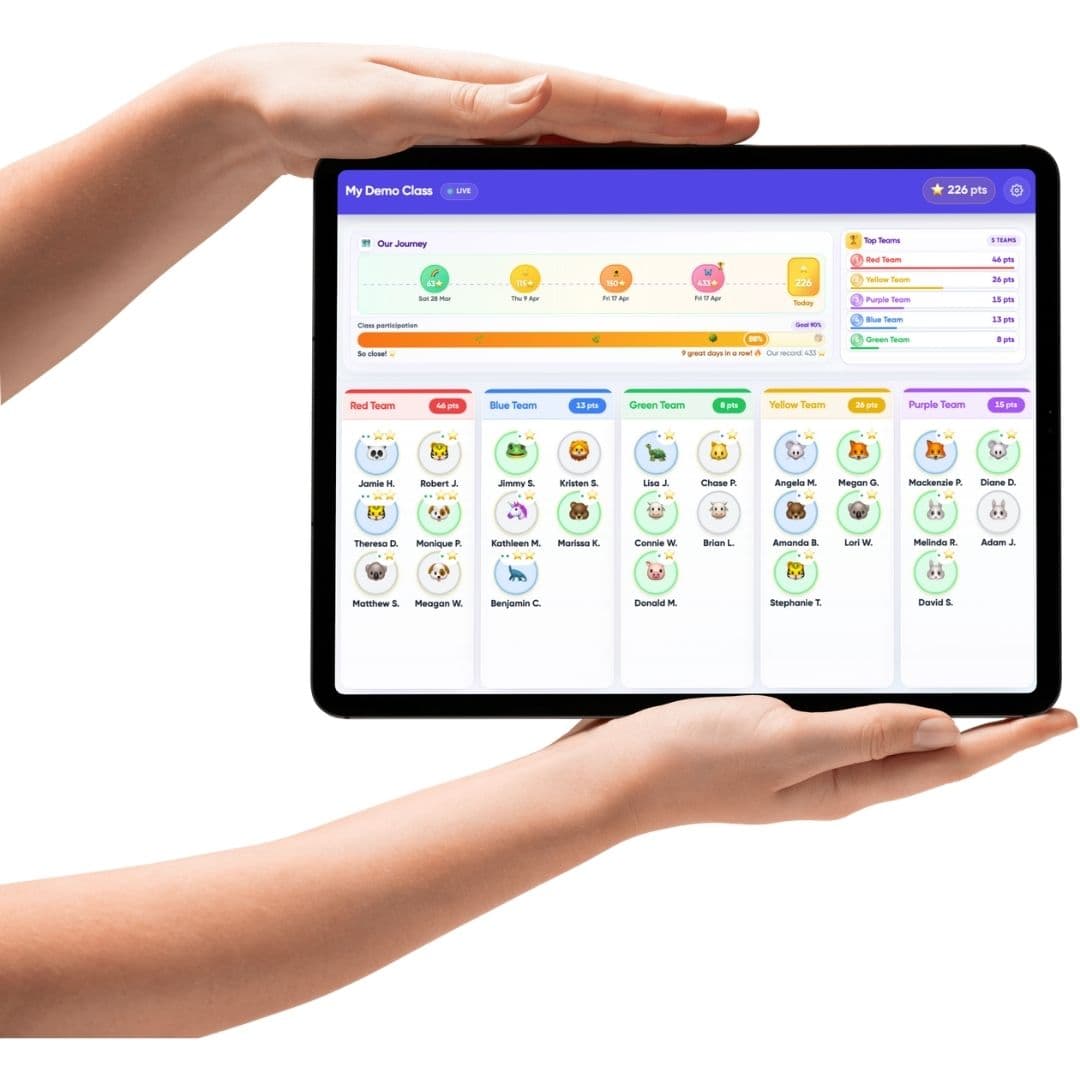
Why ClassMap.io uses gamification in the classroom?
Gamification in education gets a bad rap, and mostly for good reason. Here's the thinking behind how ClassMap.io uses game mechanics to build real engagement habits in the classroom, without leaderboards, prizes or competitive pressure.

AI literacy for teachers is now a school operations issue
AI literacy is now a school operations issue. As teachers use AI for planning, feedback and communication, principals need clear policies, staff guidance and human oversight to ensure safe, responsible and effective use across the school.
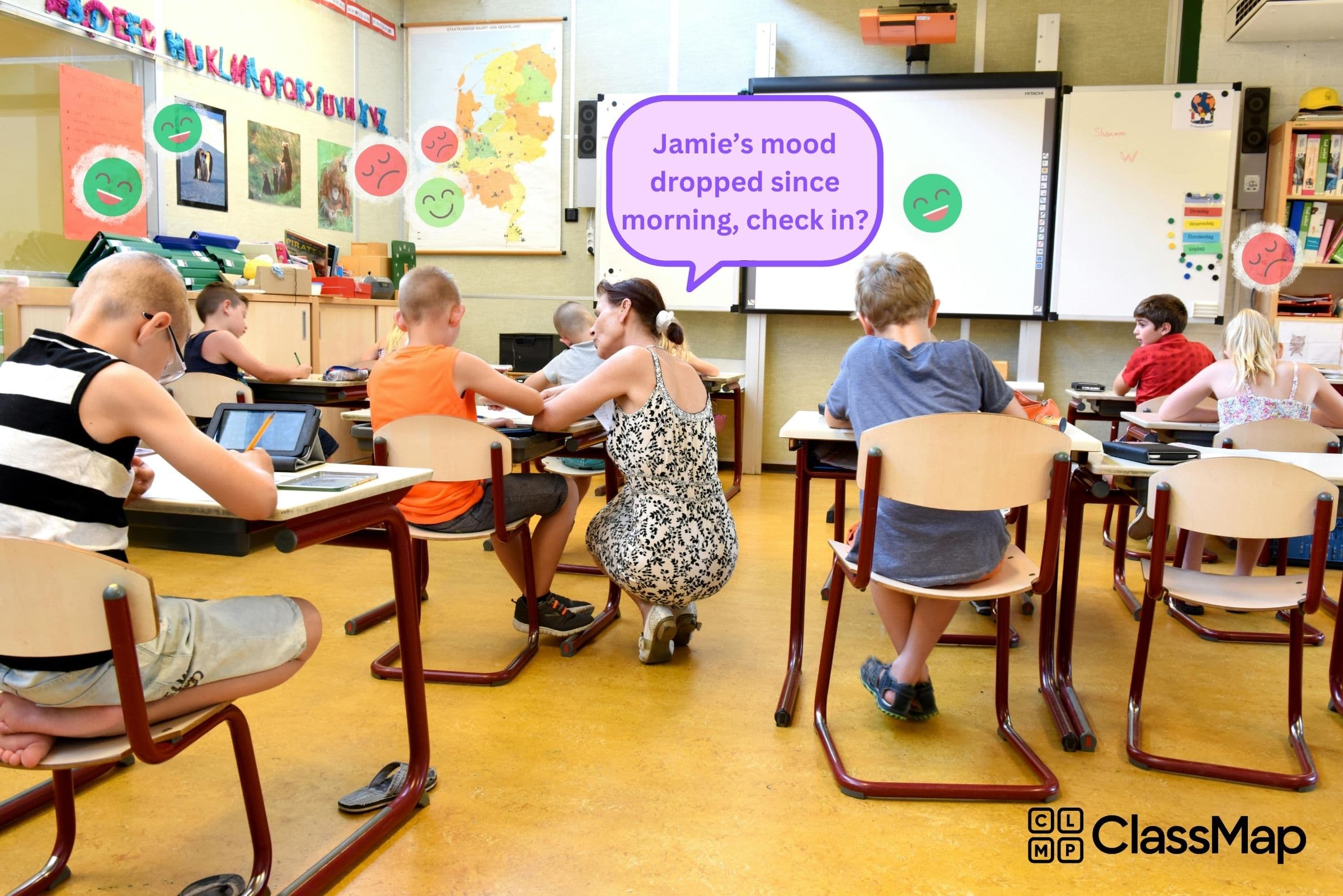
What if your classroom had a smart assistant for well-being?
Imagine an AI assistant that tracks mood, engagement and wellbeing in real time, helping teachers prevent burnout and support every student.