Why ClassMap.io uses gamification in the classroom?
Every student wants to feel like they belong in the room. Gamification, done well, can make that feeling visible, not just for the teacher, but for the student too.
Why engagement needs to be visible
Students thrive when they can see their own progress, when effort is acknowledged and when the next step feels reachable. These are not abstract ideas. They are part of what makes any environment worth showing up to, including a classroom. This is what drew us to gamification at ClassMap.io. Not points or prizes for their own sake, but the design principles that help people show up, stay consistent and build real habits over time.
When we designed our approach, the question was simple:
How do we make the everyday act of being present, focused and curious feel rewarding in itself?
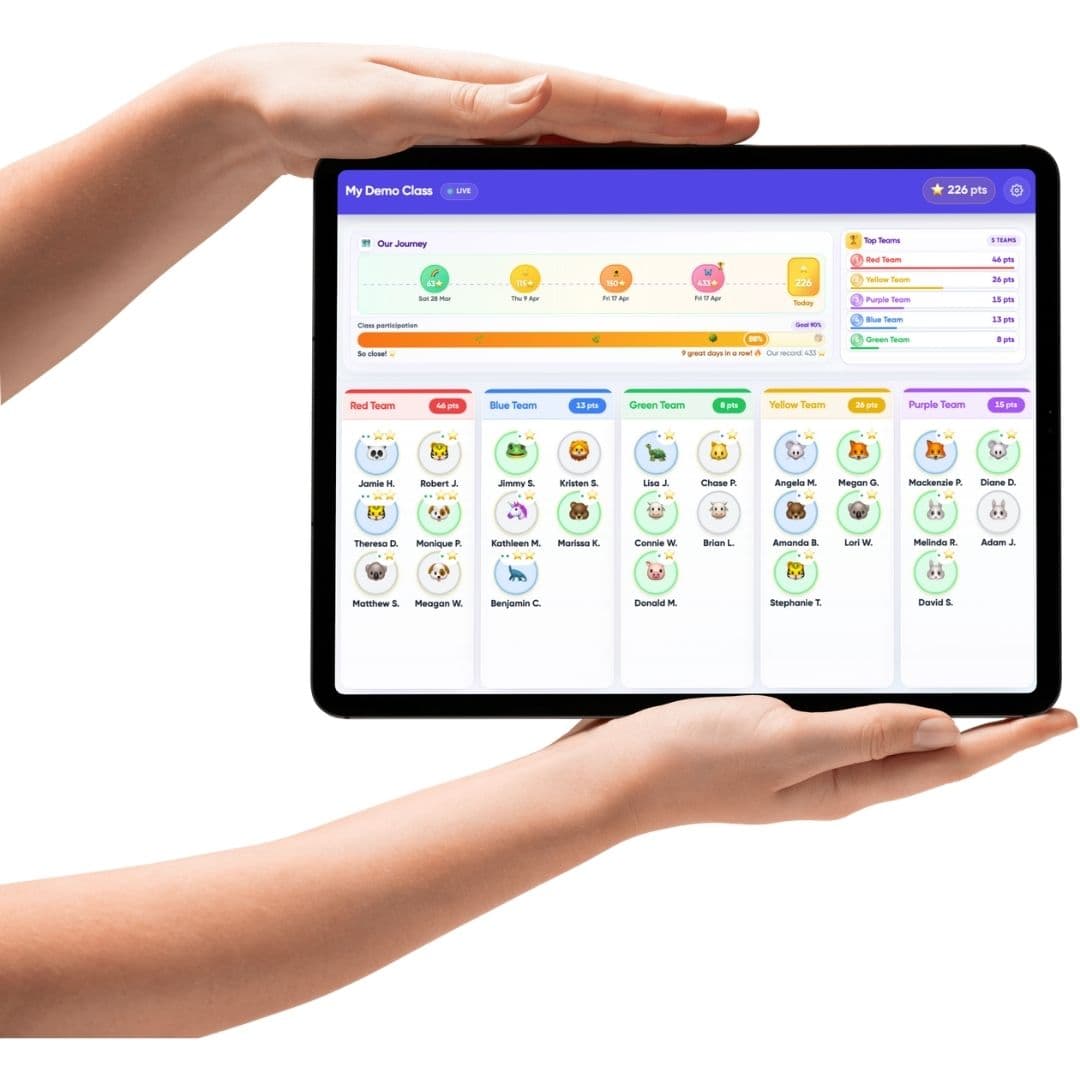
In ClassMap.io, teachers can quickly log small classroom signals such as participation, focus, confidence and collaboration. These signals then become visible through simple classroom views, helping teachers understand who is engaged, who may be drifting and where the class needs attention.
The mechanics we chose are drawn from behavioural design: progress visibility, personal streaks and a sense of place within a group. Applied thoughtfully in a classroom, they become tools for building habits, not distractions.
The goal was never to make learning feel like a game. It was to make engagement visible, to the student, the teacher and the classroom as a whole.
Presence as a starting point, not a given
One of the quieter challenges teachers face is that engagement is often hard to see.
Who understood today’s lesson? Who is fully in the room? Who is coasting? Who needs a small nudge before they disconnect completely?
In a classroom of 28 students, this is genuinely difficult to track, not because teachers are inattentive, but because the signals are scattered, subtle and easy to miss in the flow of a lesson. ClassMap.io addresses this by helping teachers capture micro-signals throughout a session: participation patterns, engagement moments and shifts in classroom energy over time. These signals are logged through a lightweight interface designed to fit into the rhythm of teaching, not interrupt it. This creates something quietly powerful: a living record of presence that goes beyond attendance.
A student can be physically in the room and still be somewhere else entirely. ClassMap.io helps teachers see the difference and respond while the lesson is still happening.
From the classroom
A real-time view of classroom energy can help teachers adjust pace, notice dips in engagement and respond before disengagement becomes invisible.
What we built, and why
ClassMap uses three specific engagement mechanics. Each one was chosen because it reinforces behaviour we actually want to encourage: genuine presence, personal consistency and a sense of belonging in the group.
The seating map as a shared space
The seating map gives every student a visible place in the room. It is not just administrative. It helps teachers understand classroom dynamics over time: who participates from where, how groups interact and where energy tends to rise or fade. For students, seeing themselves as part of the classroom map can reinforce something simple but important:
I have a place here.
The map turns the physical classroom into a shared space that students can feel part of, while giving teachers a clearer picture of how the room is working.
Personal streaks and consistency
Students can see their own participation consistency over time. Not compared to others. Not ranked against the class. Just their own pattern. Showing up, contributing and staying engaged across several lessons feels different when students can see that progress reflected back to them. Streaks reward continuity rather than performance. They make the habit of engagement something students can recognise and take pride in quietly. he point is not to create pressure. The point is to help students notice their own effort.
Class energy, not rankings
Teachers see aggregate classroom energy, not a public ranking of students. The class as a whole has a mood, a rhythm and a collective presence. Surfacing this at group level creates shared awareness without turning engagement into competition.
We also made deliberate choices about what to leave out.
Academic performance, behaviour scores and anything that ranks students against each other stay out of this engagement layer entirely.
The mechanics we chose are designed to include everyone, not to sort them.
Engagement as care, not control
Every mechanic in ClassMap.io is designed to give something back to the student:
visibility of their own patterns, a sense of their place in the classroom and a way to see their engagement arc across weeks rather than through one isolated lesson.
The teacher gets intelligence and a clearer picture of who needs attention.
The student gets a mirror.
This matters because the relationship between a teacher and their students is one of the most important factors in how learning feels, how safe students feel and how consistently they engage.
ClassMap’s approach to engagement is designed to strengthen that relationship by giving teachers better information and more meaningful touchpoints throughout the school year.
When a teacher notices that a student’s energy has dropped for three lessons in a row, that is not just a data point. It is an opening to have a conversation.
Making classrooms more human
A wellbeing trend over six weeks tells a far more human story than a single grade. A pattern of quiet participation may reveal growth that would otherwise go unnoticed. A drop in energy may show that a student needs support before the problem becomes visible in academic results or behaviour.
This is the role gamification should play in education.
Not distraction.
Not competition.
Not points for the sake of points.
But a thoughtful layer that helps students see their effort, helps teachers notice what matters and helps schools understand classroom life with more care.
The north star has not changed:
ClassMap exists to make classrooms more human, not more automated.
Thoughtful engagement design is one of the tools that gets us there.
Want to make engagement more visible in your school? Request access →
Related Articles
AI in education is moving from hype to intent
AI in education is shifting from hype to purpose: schools now want tools that support pedagogy, reduce workload and improve wellbeing with trust.
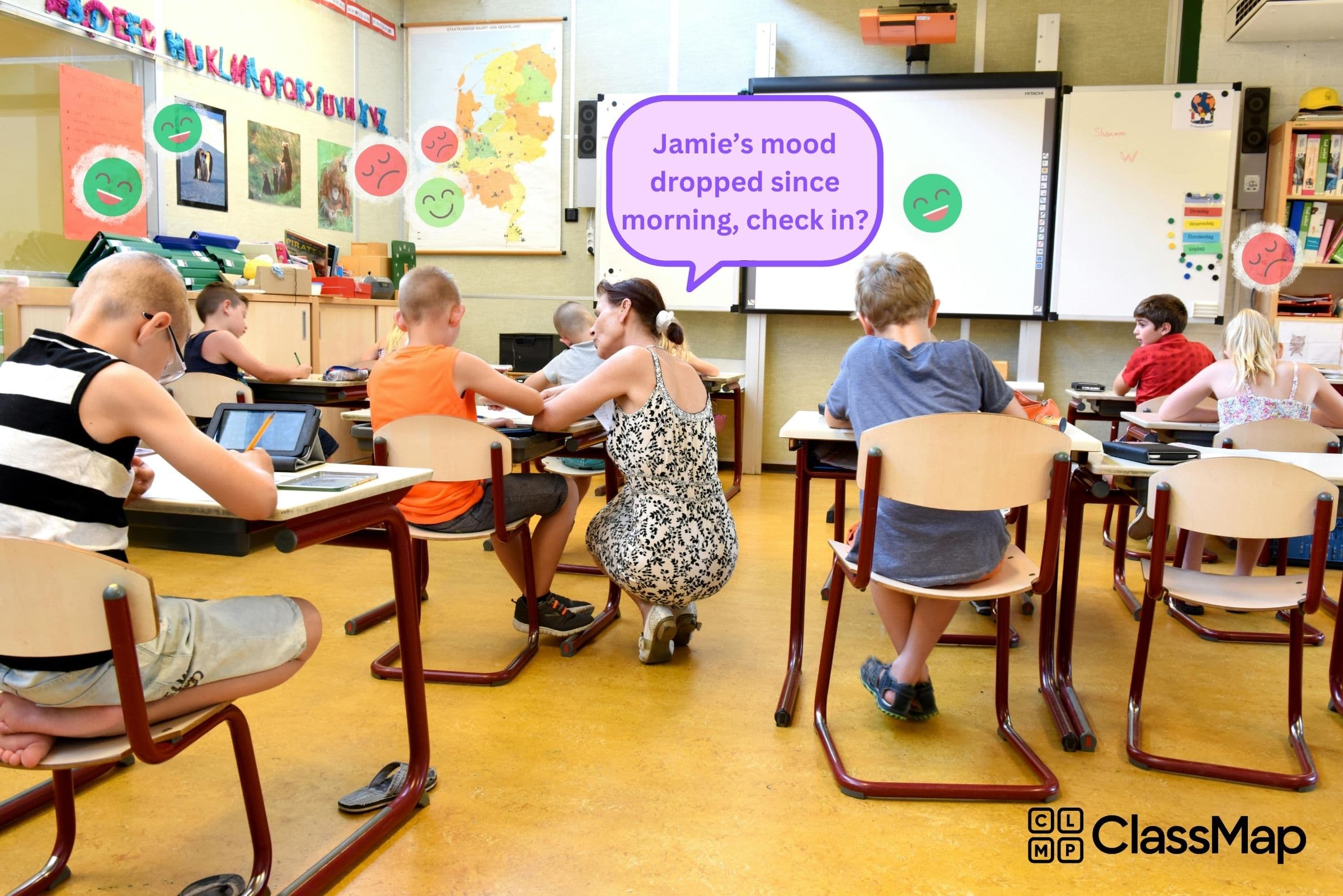
What if your classroom had a smart assistant for well-being?
Imagine an AI assistant that tracks mood, engagement and wellbeing in real time, helping teachers prevent burnout and support every student.
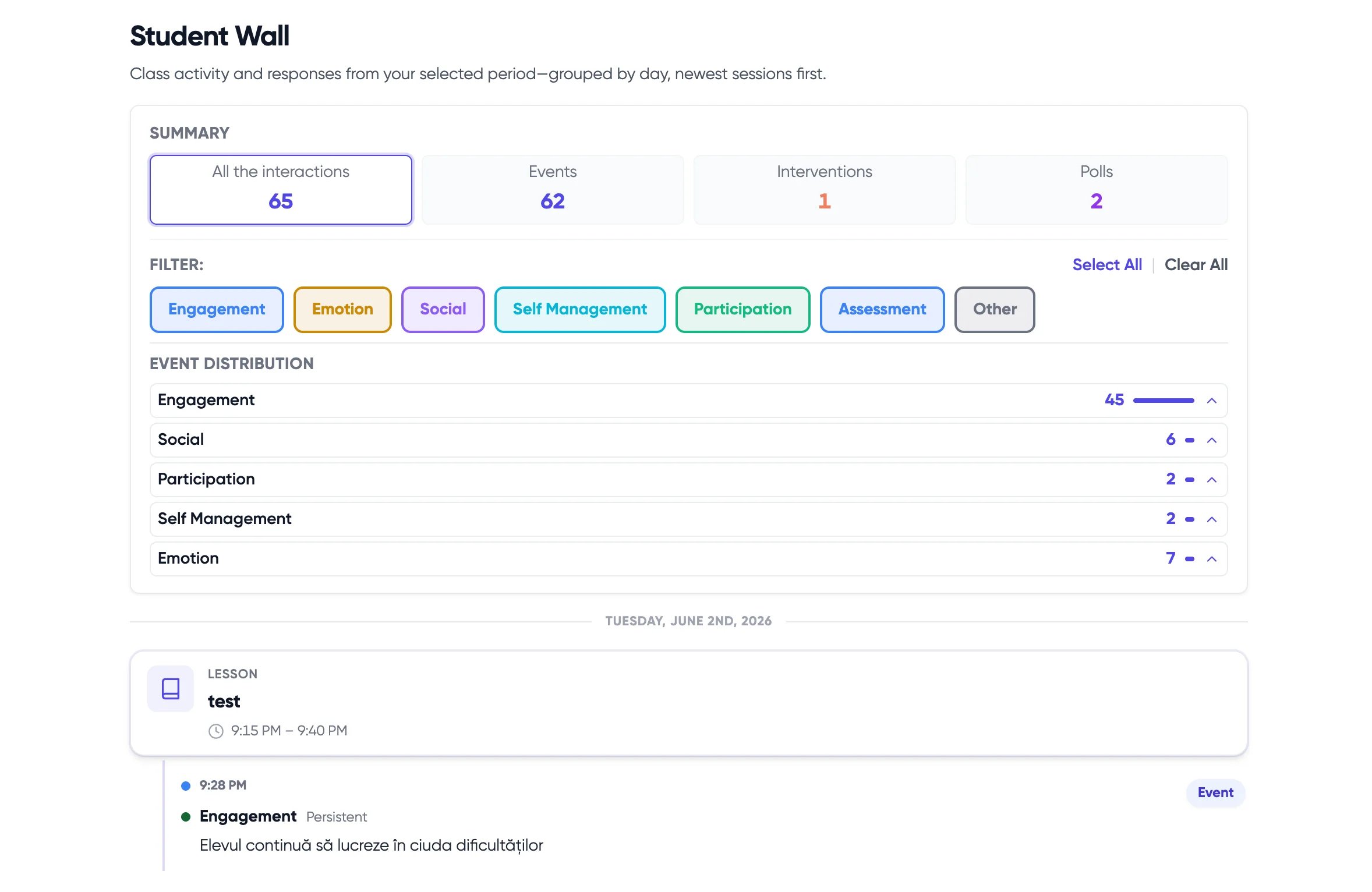
Beyond grades: why schools need systematic classroom observation for early student support
Learn how systematic classroom observation helps schools identify early signs of disengagement, frustration, and task avoidance before grades or behaviour records change.