Beyond grades: why schools need systematic classroom observation for early student support
Schools often notice student struggle too late.
A student stops participating, but their grades still look acceptable. Another avoids group work, but no behaviour incident is recorded. One becomes visibly frustrated during independent tasks, while another seems present in class but slowly withdraws from learning.
Teachers notice these moments every day. They notice who gives up quickly, who avoids challenge, who helps others, who loses confidence, who is socially isolated, and who participates only when directly invited.
The problem is that most of these observations remain informal. They stay in teacher memory, in short conversations, in parent meetings, or in scattered notes. One teacher may notice low participation. Another may notice frustration. A pastoral lead may hear that the student “does not seem like themselves.” But unless these signals are captured in a consistent way, the school may not see the pattern early enough.
This is where systematic classroom observation becomes useful. It gives schools a practical way to notice how students are experiencing learning before concerns become visible in grades, attendance, or behaviour records.
What is systematic classroom observation?
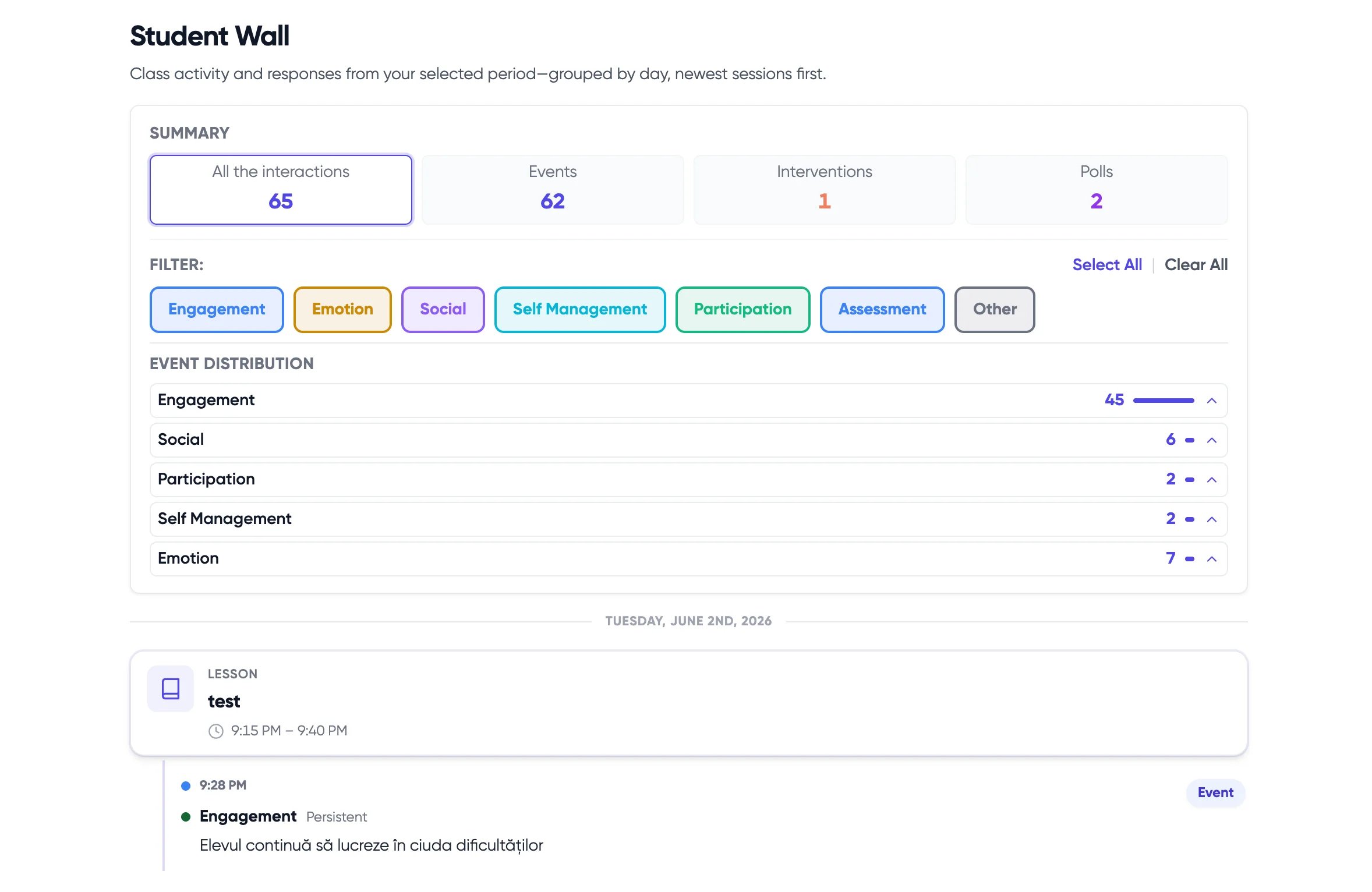
Systematic classroom observation is a structured way for teachers to record visible learning behaviours over time.
It does not mean judging students. It does not mean watching teachers. It means noticing classroom signals in a consistent way, so that patterns become easier to understand and support.
These signals may include participation, task avoidance, persistence, frustration, collaboration, social withdrawal, confidence, emotional response, and student engagement.
A single observation does not define a student. But repeated observations can help teachers and school leaders ask better questions earlier.
Is this student participating less than before? Are they avoiding independent work? Are they becoming frustrated during difficult tasks? Are they socially connected in class? Are they showing persistence when learning becomes challenging?
These questions help schools move from general impressions to early, practical support.
Why grades do not tell the whole story
Academic progress matters. Schools need grades, assessments, attendance data, curriculum tracking, and exam preparation. These help teachers understand what students know and where academic support is needed.
But students do not learn through cognition alone.
They also learn through attention, confidence, persistence, emotion, collaboration, curiosity, and their ability to respond to difficulty. A student who avoids challenge may not show weak results immediately. A student who feels overwhelmed may still complete the task, but with growing stress. A student who is socially isolated may not disrupt the lesson, but may slowly disconnect from the class.
The OECD reports that social and emotional skills are linked with academic achievement, wellbeing, lower tardiness, and lower rates of skipping school. It also highlights persistence, self-control, responsibility, achievement motivation, and curiosity as strongly connected with educational outcomes.
For schools, this should not become another complicated scoring system. It should lead to a simpler question: are we noticing the behaviours that show how students are engaging with learning?
From informal noticing to early student support
Teachers already observe the non-cognitive side of learning every day.
They see when a student is attentive but quiet. They see when a student is passive rather than engaged. They see when collaboration works and when it breaks down. They see when effort disappears after the first mistake. They see when behaviour is not just behaviour, but a sign that the student is struggling with the task.
The challenge is that observation without structure is hard to use across time.
One teacher may describe a student as “not motivated.” Another may say the student “does not try.” A third may say the student “avoids independent work.” These statements may point to the same pattern, but they do not give the school a clear basis for action.
Systematic observation improves the language.
Instead of saying, “This student has a bad attitude,” the school can say, “This student avoided starting independent tasks in several lessons.”
Instead of saying, “She is disengaged,” the school can say, “Her participation has dropped compared with previous weeks.”
Instead of saying, “He is disruptive,” the school can say, “He becomes off-task during transitions and distracts nearby peers.”
This difference is important. Labels close the conversation. Observations open it.
A label says what we think the student is. An observation says what we saw, when we saw it, and what we might try next.
Early warning needs earlier classroom signals
Many early warning approaches focus on attendance, behaviour, and academic performance. UNICEF’s work on early warning systems discusses indicators such as poor attendance, low academic performance, and behaviour concerns as part of identifying students who may be at risk of dropping out.
These indicators are useful, but they can also appear late.
By the time attendance drops, the student may already be disengaged. By the time grades fall, confidence may already be damaged. By the time behaviour becomes serious enough to record, frustration may already have built up.
Classroom observation can add an earlier layer.
It can help schools notice the stage before the formal warning sign. The point is not to predict every problem. The point is to reduce the chance that early signals remain invisible.
A student who avoids challenge for several weeks deserves attention before failure appears in the gradebook. A student who is repeatedly overwhelmed during independent tasks deserves support before anxiety becomes a wider barrier. A student who slowly withdraws from peers deserves care before isolation becomes normal.
Early student support begins with early visibility.
The non-cognitive side of learning
The phrase “non-cognitive learning” can sound abstract, but in the classroom it is very practical.
It is the student who understands the task but does not start because they fear getting it wrong. It is the student who can answer orally but freezes during written work. It is the student who becomes frustrated when the answer is not immediate. It is the student who works well with one group but withdraws in another. It is the student who appears compliant but rarely thinks actively.
These behaviours are not separate from academic learning. They shape academic learning.
The idea that schools should care about attitudes, values, and emotional responses is not new. Krathwohl, Bloom, and Masia described the affective domain of learning, including receiving, responding, valuing, organization, and characterization. In simple terms, education is not only about what students know. It is also about what they pay attention to, how they respond, what they begin to value, and how those values gradually appear in behaviour. (George Mason University)
Schools should be careful here. They cannot directly measure a student’s inner values in the same way they measure a spelling test or a maths score. But they can observe visible behaviours connected to the affective side of learning.
That is the practical bridge between theory and classroom life.
How ClassMap supports systematic classroom observation
ClassMap helps schools move from informal teacher noticing to structured, teacher-led classroom observation.
It should not be described as a tool that measures character or directly measures attitudes. That would be too strong. A more accurate position is this:
ClassMap helps schools observe visible classroom behaviours connected to the non-cognitive side of learning.
This includes behaviours around student engagement, persistence, emotional state, collaboration, attitude, social interaction, and work preference.
The value is not that one observation gives a complete answer. It does not. The value is that repeated observations can reveal patterns that are difficult to see from memory alone.
A teacher may notice that a student has been quieter recently. ClassMap can help that observation become part of a wider picture. Has participation dropped across several lessons? Is the student avoiding only independent work, or also group work? Does frustration appear in one subject or across the timetable? Are other teachers seeing the same pattern?
These are better questions than “Is this student doing well or not?”
They move the school from general impressions to useful evidence.
In a Bucharest pilot, teachers logged over 38,000 classroom observations across 1,100+ sessions, which is what turns individual noticing into patterns a school can act on.
Visibility, not surveillance
Schools need better visibility, but they do not need surveillance.
ClassMap’s strongest position is that observation remains teacher-led. There are no cameras, microphones, biometrics, or passive tracking. The teacher notices what matters in the context of the lesson. The system helps structure and remember those observations.
That matters because classrooms are human environments. A tool that tries to automate judgement about children can easily create mistrust. A tool that supports teacher judgement can strengthen the school’s ability to care.
The aim is not to watch students more. The aim is to understand students earlier.
Frequently asked questions
What is systematic observation in schools?
Systematic observation in schools is a consistent way of noticing and recording visible classroom behaviours over time. It helps teachers and school leaders understand patterns in student engagement, participation, persistence, collaboration, emotional response, and task behaviour.
Why should schools observe non-cognitive learning?
Schools should observe non-cognitive learning because important signs of struggle often appear before grades change. Low participation, task avoidance, frustration, or social withdrawal can help schools offer support earlier.
Is ClassMap a student monitoring tool?
ClassMap is designed around teacher-led observation, not surveillance. It helps teachers structure what they already notice in the classroom, without cameras, microphones, biometrics, or passive tracking.
Conclusion
Schools cannot support what they cannot see.
Academic data is necessary, but it is not enough. Grades show outcomes. Attendance shows presence. Behaviour records show incidents. But many important learning signals appear earlier and more quietly.
They appear in participation, persistence, frustration, avoidance, collaboration, confidence, and social connection.
Teachers already notice these signals. The challenge is that schools need a better way to capture them consistently, understand them over time, and respond before small concerns become serious problems.
Systematic classroom observation gives schools that missing layer.
ClassMap offers a practical way to do this by turning everyday teacher observations into structured insight that schools can use carefully, responsibly, and early.
The goal is not to measure character.
The goal is not to label students.
The goal is not to monitor teachers.
The goal is to help schools see the full learning experience earlier, so that support can begin while it can still make the biggest difference.
If you lead a school and want to see how this works in practice, book a short walkthrough of ClassMap or ask about joining an early pilot. No cameras, no extra workload, just a clearer view of how your students are experiencing learning.
Related Articles

Getting to know your class in the first four weeks
Get to know your class through a flexible four-week observation routine, with classroom examples and practical ways to support participation and collaboration.
Not All Student Progress Fits in a Gradebook
Discover why grades tell only part of the story and how teachers can notice student engagement, persistence, connection, and growth beyond the gradebook.
Why ClassMap.io uses gamification in the classroom?
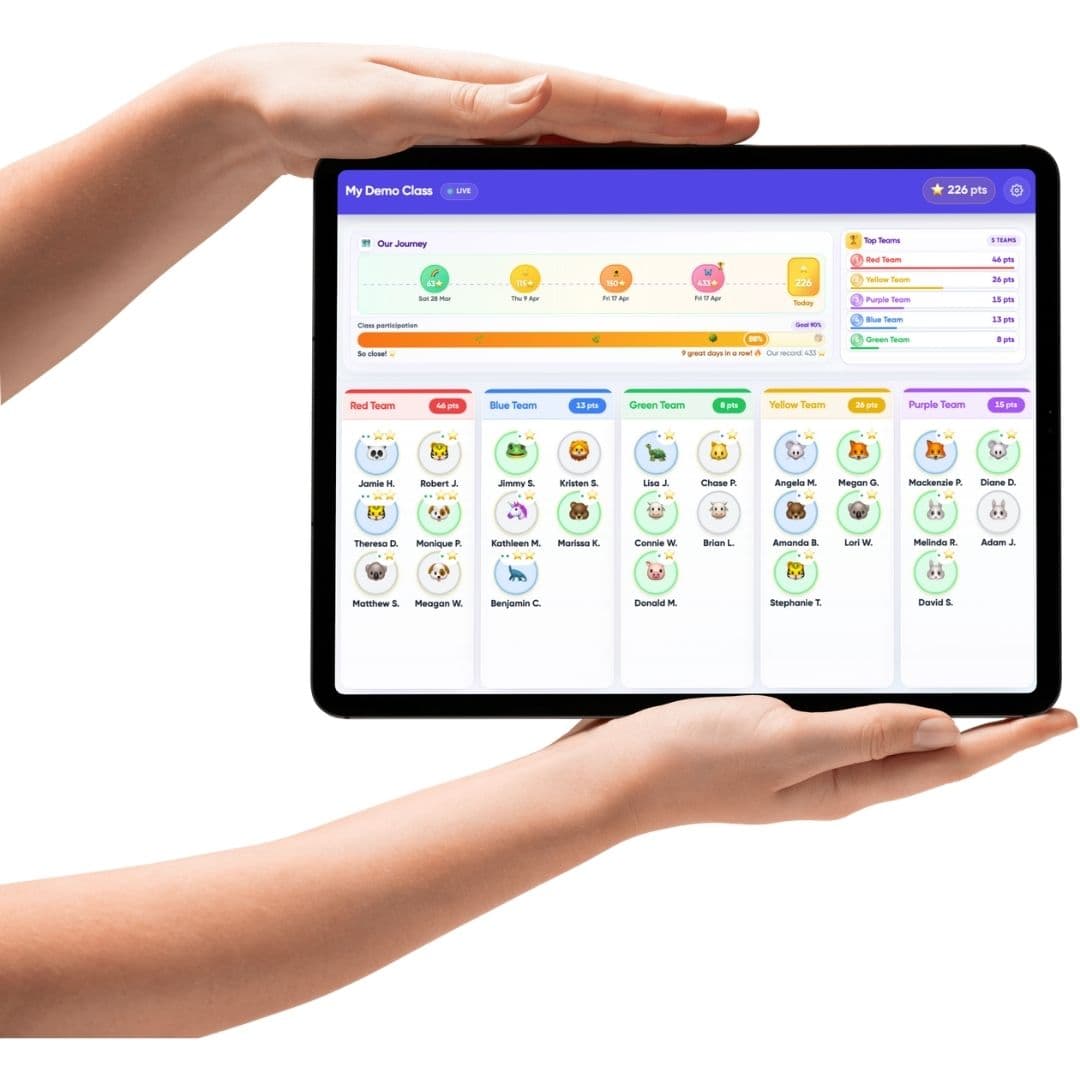
Gamification in education gets a bad rap, and mostly for good reason. Here's the thinking behind how ClassMap.io uses game mechanics to build real engagement habits in the classroom, without leaderboards, prizes or competitive pressure.