Getting to know your class in the first four weeks
Getting to Know Your Class: What to Notice in the First Four Weeks
A practical observation routine for the start of the 2026–27 school year.
Imagine one of your first lessons with a new class. A few students volunteer before you have finished asking the question. Others spend time writing their answers but choose to keep them to themselves. When the class moves into group work, one student takes charge while another waits to be given a role. As you learn their names and establish routines, these small moments offer questions to return to: how does each student take part, what helps them get started, and where might they need more support?
In Not All Student Progress Fits in a Gradebook, we explored participation, persistence and connection through end-of-year reflection. The beginning of the 2026–27 school year offers a chance to approach those same areas from the other direction. Over the first four weeks, try choosing a small focus for your observations and returning to it across several lessons. Treat the sequence below as a flexible starting point, giving yourself longer with each focus if you see a class only once a week.

Getting to know how students learn
During the first week, begin with participation and give students different opportunities to show their thinking. Look at what happens in a whole-class discussion, a conversation with a partner and an independent task. For example, a student who does not volunteer an answer might explain it clearly to someone sitting beside them. A brief note about that difference gives you something specific to explore in the next lesson. You could offer time to prepare an answer before sharing, then ask the student whether that preparation was useful.
As you move into the second week, extend your attention to what happens when learning becomes difficult. Notice where a student gets stuck and what happens after you offer support. Imagine a student who has not begun a writing task but starts their first sentence after working through an example with you. Record the activity and the help offered alongside what you saw. Before interpreting the hesitation as a lack of effort, check whether the instructions were clear and whether the student had the knowledge needed to begin. In a later, comparable task, you can revisit the approach and ask which part helped.
Keep these observations grounded in the conditions of the lesson. The Education Endowment Foundation's recommendations emphasise understanding pupils and their circumstances, building supportive relationships and using simple approaches within regular routines. Apply that guidance by leaving room to revise your first impressions. Include strengths as you go: a thoughtful question, another attempt after a mistake, or an explanation that helps a classmate. Respond to needs whenever they arise; the weekly focus simply gives your reflection some structure.
Understanding their place in the class
In the third week, pay closer attention to how students take part in shared activities. Watch how they enter a group, choose a role and respond to each other's ideas. For example, a student might wait while everyone else chooses a task, then contribute to a drawing after being invited to illustrate the group's idea. Describe that sequence in your note and follow it with a conversation. Asking how the activity felt, or what would make it easier to join in next time, gives the student a chance to explain their experience.
The CDC describes school connectedness in terms of students feeling that adults and peers care about them and their learning. Keep that personal perspective in view when interpreting classroom observations. A single group activity cannot establish whether someone feels that they belong. Use what you notice to open a conversation, keeping the student's explanation separate from your own observations. Look for invitations, encouragement and practical help too, and spread your attention across the class, including students whose experience you still know little about.
Turning observations into the next lesson
By the fourth week, return to your notes and choose one question worth following up. Perhaps a student has contributed more often in pairs or has repeatedly needed help to start independent work. Before interpreting a change, consider the opportunities each lesson provided. A discussion offers more chances to speak than a silent writing task, so a difference in recorded participation needs that context. A blank record also means only that you have no recorded observation; leave room for what you have yet to learn.
Choose one small adjustment and decide when to review it. You might give a student a minute to prepare an answer before the next discussion, clarify the first step of a task, or offer a role in a group activity. Ask for their perspective afterwards and compare what happens across similar opportunities. Consider other changes in the lesson as well, since an improvement alongside an adjustment does not establish that the adjustment caused it. Our article on reviewing classroom support explores how to keep that follow-up part of your routine.
Keep the recording brief enough to serve this process. Include the date, activity, what you observed and any support offered, using descriptions you could explain to the student or a colleague. Focus on moments connected to a question you intend to revisit, and review progress and strengths alongside difficulties. When deciding what to record, ask how the note could inform a conversation or the next lesson.
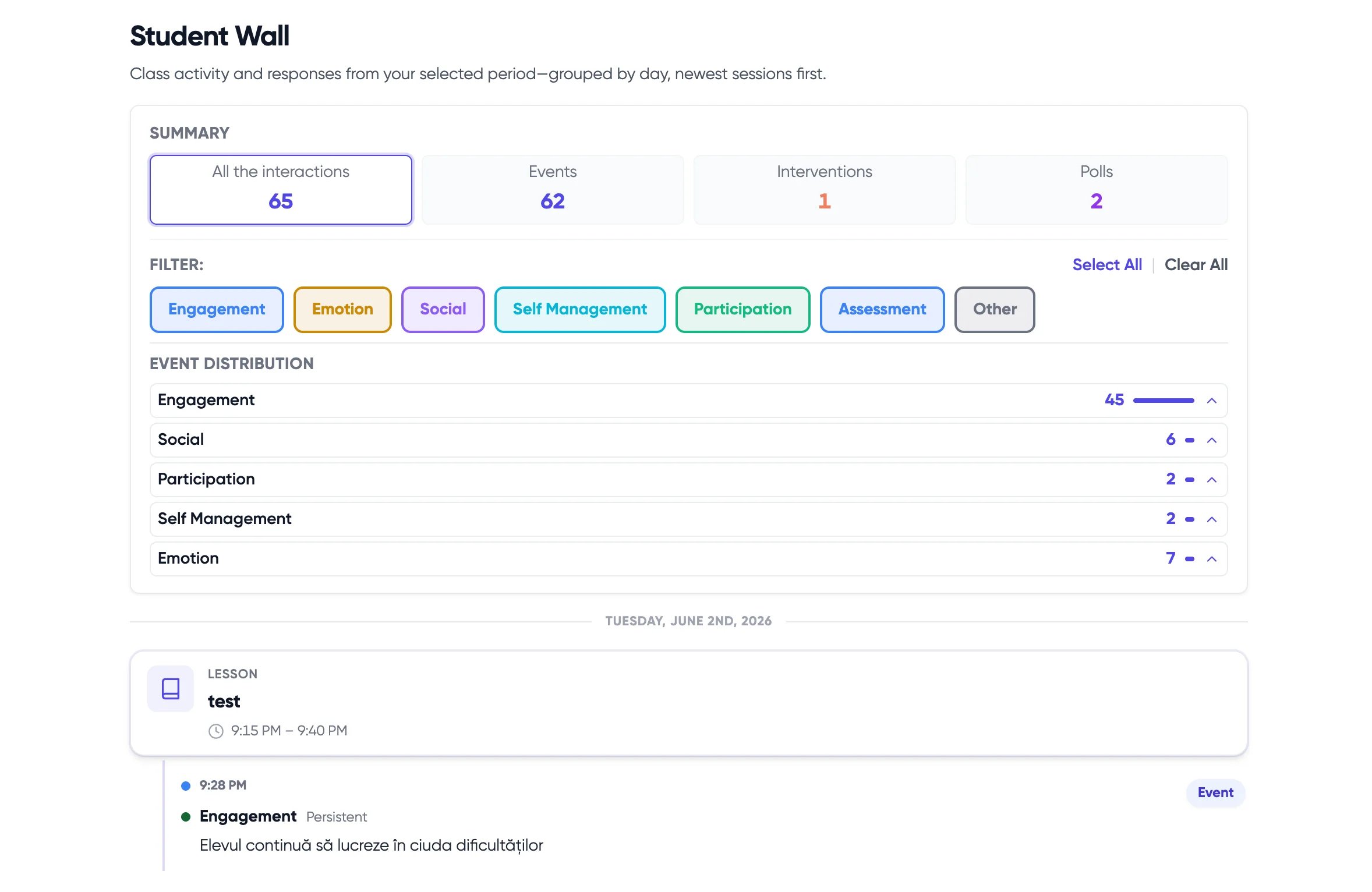
ClassMap supports teacher-led recording of classroom observations and reviewing patterns over time, as described in our guide to systematic classroom observation. To try this routine, begin with one class and one observation focus, then review what you have recorded alongside your knowledge of the lesson and what students have shared. Take one question into the following week: what could I try that would help this student participate, get started or contribute? Leave room for the answer to develop as you get to know them.
Related Articles
Not All Student Progress Fits in a Gradebook
Discover why grades tell only part of the story and how teachers can notice student engagement, persistence, connection, and growth beyond the gradebook.
Beyond grades: why schools need systematic classroom observation for early student support
Learn how systematic classroom observation helps schools identify early signs of disengagement, frustration, and task avoidance before grades or behaviour records change.

The myth of the “Difficult Class” and the 20/70 Rule
Many “difficult classes” are uneven: ~20% of students can drive ~70% of disruption. Learn fair, targeted interventions that protect learning time.